报告题目:Harnessing S2S Predictability from Annual Evolution
报告专家:Ming Cai 教授
报告时间:2026年3月18日(周三)13:30
报告地点:气象楼423会议室
主 持 人:虞越越 教授
腾讯会议:412-333-101
专家简介:
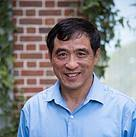
Ming Cai is a climate scientist in the Department of Earth, Ocean, and Atmospheric Science at Florida State University. He specializes in atmospheric dynamics, climate feedback mechanisms, and subseasonal-to-seasonal (S2S) predictability. His research focuses on polar amplification, stratosphere-troposphere coupling, and developing new forecast paradigms for extreme weather using dynamical models and novel phase-space trajectory analysis.
报告摘要:
Subseasonal-to-seasonal (S2S) prediction is often regarded as a “desert” of forecast skill. Weather forecasts lose accuracy beyond the two-week limit, while seasonal forecasts benefit from slowly varying external influences such as ocean conditions and solar forcing. Moreover, most S2S forecasts focus primarily on anomaly fields, separating S2S anomalies from the annual evolution in which they are embedded.
Here we propose a new paradigm: a substantial portion of S2S anomalies may be embedded in the annual evolution of the climate system, which itself varies from year to year. Because annual evolution reflects the influence of slowly varying external drivers, it may be inherently more predictable than S2S anomalies alone. Departures of the predicted annual evolution from its climatology can provide a more skillful basis for S2S forecasts. We demonstrate the feasibility of this paradigm by applying it to the Northern Hemisphere stratospheric polar vortex (SPV). The annual evolution of the SPV is represented as an elliptical trajectory in phase space whose six parameters vary from year to year. We confirm that a large portion of cold-season S2S SPV anomalies is closely associated with differences in the SPV annual evolution across years. By predicting these annually varying parameters before the onset of the cold season, the framework enables skillful prediction of S2S SPV anomalies in the cold season, including the magnitude and timing of wintertime extrema, at lead times of up to six months.
Beyond the SPV, our study suggests that S2S predictability may be harnessed in other climate systems with strong seasonal cycles, such as Arctic sea-ice variability, the East Asian monsoon, and regional temperature and precipitation extremes. Harnessing S2S predictability from annual evolution offers a new pathway for improving extended-range forecast skill.
欢迎广大师生踊跃参加!
气候系统预测与变化应对全国重点实验室
气象灾害教育部重点实验室
气象灾害预报预警与评估协同创新中心
大气科学学院
2026.3.11