报告时间:2026年1月7日(周三)上午10:00
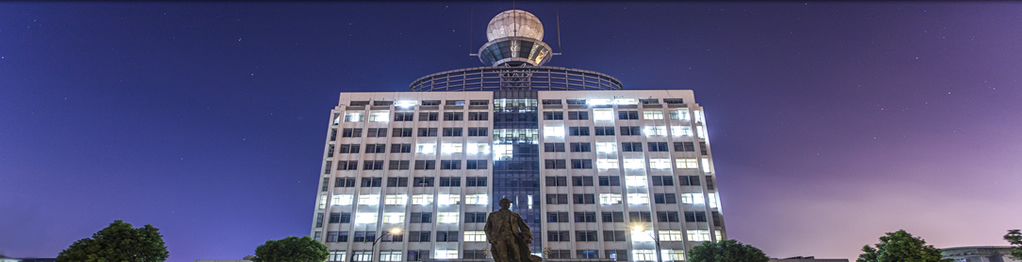
报告地点:气象楼423会议室
主 持 人:张文君 教授
报告题目:Unraveling ENSO regime shift around 2000: What the simplest Recharge Oscillation can tell us?
报告专家:谢瑞煌 副教授
专家简介:
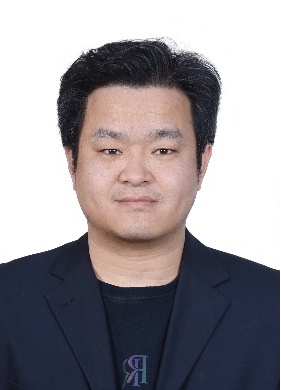
谢瑞煌,中国海洋大学大气科学系“青年英才工程”第三层次岗位副教授。2013年于中国海洋大学海洋气象系获得博士学位,曾任职于中国科学院海洋研究所。主要从事线性及非线性ENSO动力学研究,发表论文20余篇,主持国家自然科学基金2项,参与原国家海洋局国家合作专项和中科院先导专项各一项。发展并完善了非线性大气对流-海温敏感性概念,并运用于解释ENSO的非线性特征;构建了融合充放电理论的线性逆模型,用于定量诊断模式和观测中ENSO模态稳定性。
报告摘要:
What if the simplest theory could still speak volumes about ENSO’s shift around 2000? We revisit the post-2000 ENSO regime shift using a physically grounded yet minimalistic framework—Recharge Oscillator-based Linear Inverse Model (RO–LIM). RO–LIM offers a compact tool to simultaneously diagnose ENSO’s intrinsic growth rate, period, and a third key aspect: spatial pattern. Applied to reanalysis data spanning 1980–2023, RO–LIM identifies a more strongly damped ENSO intrinsic mode and a pattern shift from an eastward-propagating eastern-Pacific pattern into a westward-propagating central-Pacific (or mixed) type after 2000, reversing its spatial configuration.
What triggered this shift? The cause appears to be a reorganization of key ocean–atmosphere feedbacks: weakened thermocline feedback combined with strengthened zonal advection, set against a La Niña-like background state change. This transition is consistently captured in both observational reanalysis and CESM2 simulations. Despite its simplicity, RO–LIM proves surprisingly capable: it simplifies complex ENSO dynamics into a physically intuitive and quantitative diagnosis, revealing how slowly evolving mean-state conditions can reshape ENSO.
欢迎广大师生踊跃参加!
气候系统预测与变化应对全国重点实验室
气象灾害教育部重点实验室
气象灾害预报预警与评估协同创新中心
大气科学学院
2026.01.04